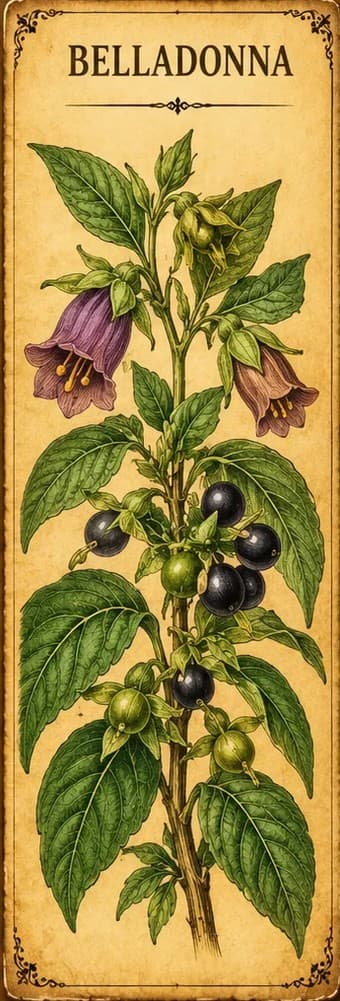
Belladonna
Atropa belladonna
Deadly nightshade, a poisonous plant whose alkaloids can cause confusion, a racing heart, seizures, coma and death.
Belladonna may interact with some medicines. If you take any medicine, read Interactions with medicines below and talk to your doctor or pharmacist before using it.
What is Belladonna?
- Plant family
- Solanaceae, the nightshade family
- Parts used
- None for home use: the plant is poisonous
- Genus
- Atropa
- Species
- belladonna
Also called
Deadly Nightshade, Atropa belladonna
Traditionally used for
- None for home use (poisonous)
Traditionally described as
Health topics
Where Belladonna appears in symptom search, and why. Being listed doesn't mean it's a proven treatment.
- Poisonous Plants
All parts are poisonous; it can cause seizures, coma and death.
Safety
Interactions with medicines
Belladonna may add to the effects of other medicines that block the same nerve signal, including antihistamines and medicines for overactive bladder, Parkinson's disease or stomach problems, and scopolamine patches for motion sickness. Avoid combining it with any other product that contains belladonna.[1]
Side effects
In two recent cases from Iran, people who ate raw belladonna leaves by accident developed dry mouth, widened pupils, a racing heart and confusion. Both recovered with hospital treatment.[2]
Pregnancy
It isn't known whether belladonna affects pregnancy or passes into breast milk, but pure belladonna is toxic and may harm an infant or small child.[1]
Toxicity testing
Belladonna, or deadly nightshade, is a poisonous plant in the nightshade family. Its alkaloids block a nerve signal (acetylcholine) and can cause dry mouth, widened pupils, a racing heart, flushing, unsteadiness, agitation, confusion and trouble passing urine. Severe poisoning can cause seizures, coma and death. How bad it gets depends on how much is eaten. Get emergency help right away if anyone eats any part of the plant.[2]
Technical detail: anticholinergic toxicity (atropine-type alkaloids); treated with supportive care and benzodiazepines, and physostigmine in severe cases.
Contamination
Some homeopathic belladonna products have been found to contain more belladonna than the label says, enough to cause serious harm and even death in infants and small children. The FDA hasn't tested these products to confirm what's in them, and the amount can vary between bottles and brands. Keep all belladonna products away from children, and talk to a health care provider before giving one to a child.[1]
Depends on how it's prepared
In 2017, Hyland's baby teething tablets containing belladonna were recalled across the US because they contained inconsistent amounts of belladonna alkaloids that could differ from the label. The FDA said belladonna is a serious health hazard to children and that there is no known safe or toxic dose of it in children.[3]
What does the research say?
Traditional use
These are traditional uses, not proven treatments.
History and medicines, not home remedies: the name comes from the Italian for "beautiful lady", probably because women once used the plant to widen their pupils for cosmetic effect. Its main compounds, atropine and scopolamine, act on the nervous system. The leaves have been used for gut spasms, including in a prescription medicine combining belladonna alkaloids with phenobarbital, and in traditional medicine for asthma and bronchitis.[2]
Most belladonna products sold today are homeopathic: so diluted that some may contain no belladonna at all. They're commonly used for minor pain and fevers, but their benefits aren't well defined, and the US Food and Drug Administration hasn't reviewed them for safety or effectiveness. Some prescription medicines also contain belladonna, such as belladonna alkaloids with phenobarbital, and belladonna with opium as a rectal suppository.[1]
In short
Poisonous. Get emergency help if any part of the plant is eaten.
Sources
- [1] Belladonna: Overview, Uses, Side Effects, Precautions, Interactions, Dosing and Reviews — WebMDGeneral reference
- [2] Severe Neurotoxicity due to Atropa belladonna Poisoning: A Case Report and Literature Review · DOI: 10.1155/2024/5411258Peer-reviewed study
- [3] Standard Homeopathic Company Issues Nationwide Recall of Hyland's Baby Teething Tablets and Hyland's Baby Nighttime Teething Tablets Due to Mislabeling — U.S. Food and Drug AdministrationGovernment health agency
This information is educational and traditional in nature, and is not a substitute for professional medical advice.