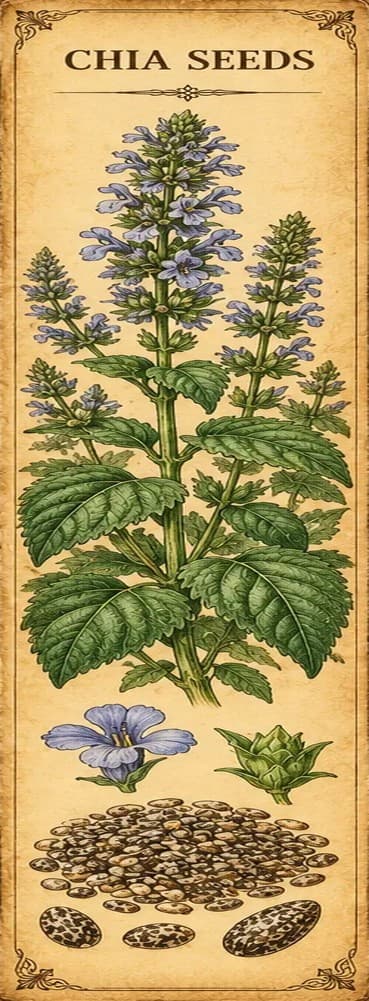
Chia Seeds
Salvia hispanica
Seeds rich in fibre, protein and omega-3 fats that form a gel in water. In trials they reduced waist size and blood pressure slightly, but not cholesterol or blood sugar.
What is Chia Seeds?
- Plant family
- Lamiaceae, the mint family
- Parts used
- The seeds, often soaked into a gel
- Genus
- Salvia
- Species
- hispanica
Also called
Chia, Salvia hispanica
Traditionally used for
- Food
- Waist size and blood pressure (studied)
Traditionally described as
- High in fibre and omega-3 fats
What does the research say?
Traditional use
These are traditional uses, not proven treatments.
Chia seeds have traditionally been used as both food and medicine. They're rich in protein, omega-3 fats and fibre; when mixed with water, the fibre forms a gel.[1]
Research in people
A 2024 review of 10 trials in people with overweight found chia seeds didn't change cholesterol, triglycerides, blood sugar or insulin. They did reduce waist size, blood pressure and a marker of inflammation (C-reactive protein), but didn't change body weight or BMI. The reviewers said chia should be part of a wider plan including a balanced diet and exercise.[1]
Technical detail: waist circumference MD −2.82 cm; CRP MD −1.18 mg/L; LDL MD 0.63 mg/dL (p = 0.88); fasting glucose MD −0.03 mg/dL (p = 0.98).
Sources
- [1] Effects of chia seed (Salvia hispanica L.) supplementation on cardiometabolic health in overweight subjects: a systematic review and meta-analysis of RCTs · DOI: 10.1186/s12986-024-00847-3Review or clinical trial
This information is educational and traditional in nature, and is not a substitute for professional medical advice.