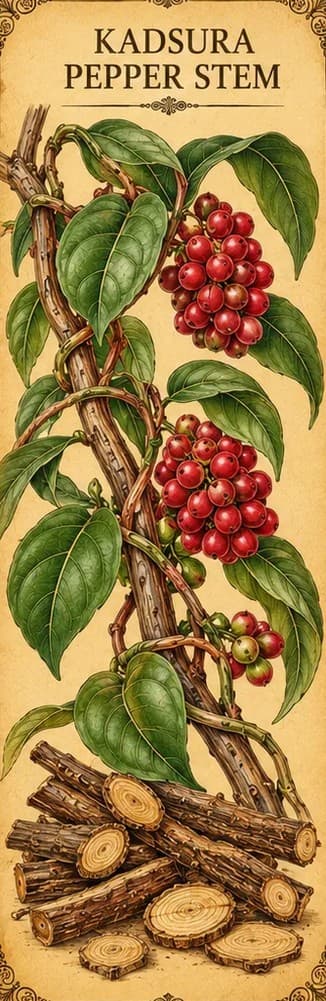
Kadsura Pepper Stem
Piper kadsura
Hai feng teng, the stem of a pepper plant, used in East Asian medicine for over 2,000 years for rheumatism and joint pain.
What is Kadsura Pepper Stem?
- Plant family
- Piperaceae, the pepper family
- Parts used
- The dried stems
- Genus
- Piper
- Species
- kadsura
Also called
Piperis Kadsurae Caulis, Piper kadsura
Traditional names
Hai Feng Teng, Haifengteng
Traditionally used for
- Rheumatism and joint pain (traditional)
Traditionally described as
- Relieved pain (in animal studies)
Health topics
Where Kadsura Pepper Stem appears in symptom search, and why. Being listed doesn't mean it's a proven treatment.
- Joint Discomfort
A traditional Chinese remedy for rheumatic joint pain; relieved pain and inflammation in animal studies. Not tested in trials.
Traditions that use it
Traditional Chinese Medicine
Called hai feng teng; used for over 2,000 years to dispel rheumatism and relieve joint pain.
What does the research say?
Traditional use
These are traditional uses, not proven treatments.
Hai feng teng has been used in East Asian medicine for over 2,000 years to "dispel rheumatism", open up the body's channels and relieve joint pain. It's mainly used to prevent and treat rheumatic diseases, on its own, in herbal formulas or in medicinal foods.[1]
Laboratory & animal research
Lab and animal results show what might be worth studying in people. They don't show that the herb has these effects in humans.
In lab and animal studies, its extracts and compounds may help reduce inflammation, relieved pain, acted as antioxidants, protected nerve cells in models of Alzheimer's disease, and showed activity against cancer cells and viruses. These haven't been confirmed in people.[1]
Sources
- [1] Piper kadsura (Choisy) Ohwi: A comprehensive review of botany, traditional uses, phytochemistry, pharmacology, and quality control · DOI: 10.1016/j.jep.2025.120134Peer-reviewed study
This information is educational and traditional in nature, and is not a substitute for professional medical advice.