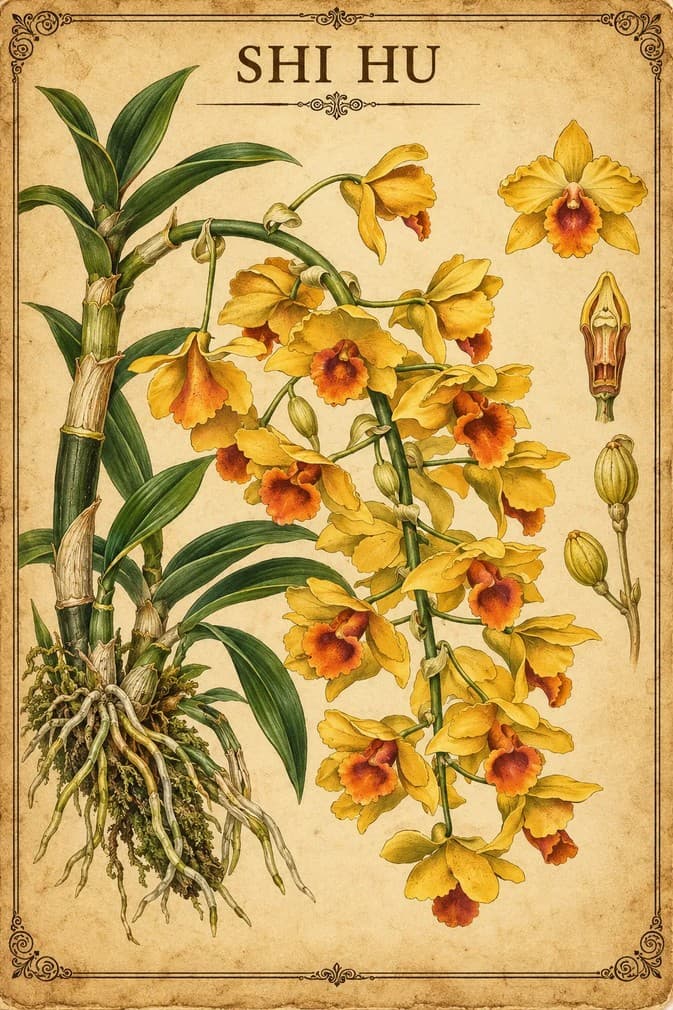
Shi Hu
Dendrobium nobile
Dendrobium, the fleshy stem of an orchid ranked a premium herb in the Shennong Herbal Classic and used in Chinese medicine to strengthen the eyes and nourish yin. Research is in the lab and in animals.
What is Shi Hu?
- Plant family
- Orchidaceae, the orchid family
- Parts used
- The fleshy stems of the orchid
- Genus
- Dendrobium
- Species
- nobile and related species
Also called
Dendrobium, Dendrobii Caulis
Traditional names
Shihu
Older scientific names
Dendrobium officinale
Traditionally used for
- Eyes (traditional)
- Nourishing yin (traditional)
Traditionally described as
- Antioxidant (in lab studies)
Traditions that use it
Traditional Chinese Medicine
Called shi hu; ranked a premium herb in the Shennong Herbal Classic and used to strengthen the eyes and nourish yin.
What does the research say?
Traditional use
These are traditional uses, not proven treatments.
Shi hu is the fleshy stem of Dendrobium orchids, a large group of about 1,500 species found across Asia, Europe and Australia. The Shennong Herbal Classic ranked it a premium medicinal herb. Several species are used, including Dendrobium nobile and Dendrobium officinale.[1]
Chinese medicine regards dendrobium as a herb that strengthens the eyes and nourishes yin, uses recorded in the Compendium of Materia Medica.[2]
Laboratory & animal research
Lab and animal results show what might be worth studying in people. They don't show that the herb has these effects in humans.
In lab and animal studies, dendrobium compounds acted as antioxidants, may help reduce inflammation, improved blood fats, slowed hardening of the arteries, reduced heart scarring and lowered blood pressure. Studies in people are extremely limited.[1]
In lab and animal studies, dendrobium polysaccharides slowed the growth of abnormal blood vessels in the retina, which damage vision in conditions such as diabetic eye disease.[2]
In short
Studies in people are extremely limited.
Sources
- [1] Chemical Constituents, Pharmacological Activities, and Cardiovascular Protective Mechanisms of Dendrobium · DOI: 10.3390/ijms27094149Peer-reviewed study
- [2] Inhibition of retinal neovascularization by Dendrobium polysaccharides: a review · DOI: 10.3389/fphar.2025.1584553Peer-reviewed study
This information is educational and traditional in nature, and is not a substitute for professional medical advice.