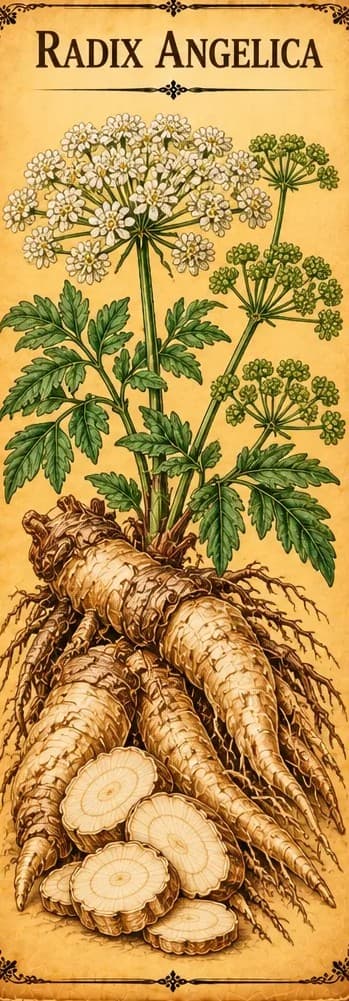
Bai Zhi
Angelica dahurica
Angelica dahurica root, used in China, Korea and Japan for colds, headache, blocked sinuses, toothache and skin sores. Research is in the lab and in animals.
What is Bai Zhi?
- Plant family
- Apiaceae, the carrot and parsley family
- Parts used
- The dried root, taken by mouth or used on the skin
- Genus
- Angelica
- Species
- dahurica
Also called
Radix Angelica, Radix Angelicae Dahuricae, Angelica dahurica
Traditionally used for
- Headache (traditional)
- Colds and sinusitis (traditional)
- Toothache (traditional)
- Skin sores (traditional)
Traditionally described as
- Relieved pain (in animal studies)
Health topics
Where Bai Zhi appears in symptom search, and why. Being listed doesn't mean it's a proven treatment.
- Colds and Nasal Congestion
Traditionally used for colds, blocked nose and sinusitis, often combined with xanthium. Not tested on its own in trials.
- Headache
A traditional Chinese remedy for headache and forehead pain. Not tested on its own in trials.
Traditions that use it
Traditional Chinese Medicine
Called bai zhi; used for centuries for colds, headache, blocked sinuses, toothache and skin sores.
Safety
Toxicity testing
Studies of its toxicity are relatively lacking, and the safety of some of its coumarins in clinical use isn't clear.[1]
What does the research say?
Traditional use
These are traditional uses, not proven treatments.
Bai zhi is described as pungent and warm, and has been used in China for centuries, alone or in formulas, for:
- Colds and fever, headache and forehead pain
- Blocked nose, sinusitis and nosebleeds
- Toothache
- Aches from "cold and damp"
- Vaginal discharge
On the skin it's used for boils, sores and painful swellings. In Korea and Japan it's used for colds, headache and rhinitis, and in Japan also for acne and skin rashes. It's also made into teas.[1]
Laboratory & animal research
Lab and animal results show what might be worth studying in people. They don't show that the herb has these effects in humans.
In lab and animal studies, the root and its coumarins (especially imperatorin) relieved pain, may help reduce inflammation, slowed tumours, killed microbes and protected nerves and the liver. These haven't been confirmed in people.[1]
In short
Toxicity studies are lacking.
Sources
- [1] The Angelica dahurica: A Review of Traditional Uses, Phytochemistry and Pharmacology · DOI: 10.3389/fphar.2022.896637Peer-reviewed study
This information is educational and traditional in nature, and is not a substitute for professional medical advice.