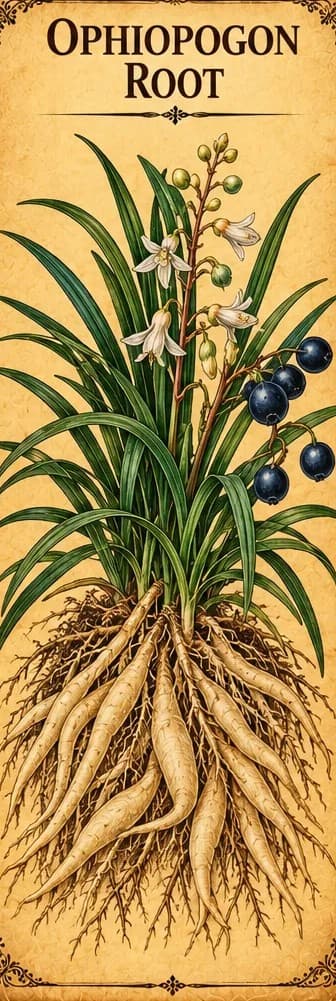
Ophiopogon Root
Ophiopogon japonicus
Mai dong, the small tuberous roots of a clumping plant, and one of the three herbs in the classical Chinese heart formula sheng mai. Its main compound has been studied in the lab and in animals.
What is Ophiopogon Root?
- Plant family
- Asparagaceae, the asparagus family
- Parts used
- The small, light brownish-yellow tuberous roots
- Genus
- Ophiopogon
- Species
- japonicus
Also called
Dwarf Lilyturf, Ophiopogonis Radix, Ophiopogon
Traditional names
Mai Dong, Maidong
Traditionally used for
- Qi and yin tonic in sheng mai (traditional)
- Heart symptoms (traditional)
Traditionally described as
- Protected the heart (in lab and animal studies)
Traditions that use it
Traditional Chinese Medicine
Called mai dong; one of the three herbs in the classical formula sheng mai, used to "supplement qi and yin".
What does the research say?
Traditional use
These are traditional uses, not proven treatments.
Ophiopogon root, called mai dong in Chinese, is one of the three herbs in sheng mai, a classical Chinese formula first written down about 1,000 years ago. With ginseng and schisandra, it's used to "supplement qi and yin" and to ease symptoms linked to irregular heartbeat and heart failure.[1]
Laboratory & animal research
Lab and animal results show what might be worth studying in people. They don't show that the herb has these effects in humans.
Ophiopogonin D, a main compound of the root, has been studied in lab and animal research. It may help reduce inflammation, slowed cancer cells, and protected the heart, blood vessels, liver and bones. These effects haven't been confirmed in people.[2]
Sources
- [1] Effectiveness and Safety of Shengmai San for Viral Myocarditis: A Systematic Review and Meta-Analysis of Randomized Controlled Trials · DOI: 10.1155/2024/2127018Review or clinical trial
- [2] Ophiopogonin D: review of pharmacological activity · DOI: 10.3389/fphar.2024.1401627Peer-reviewed study
This information is educational and traditional in nature, and is not a substitute for professional medical advice.