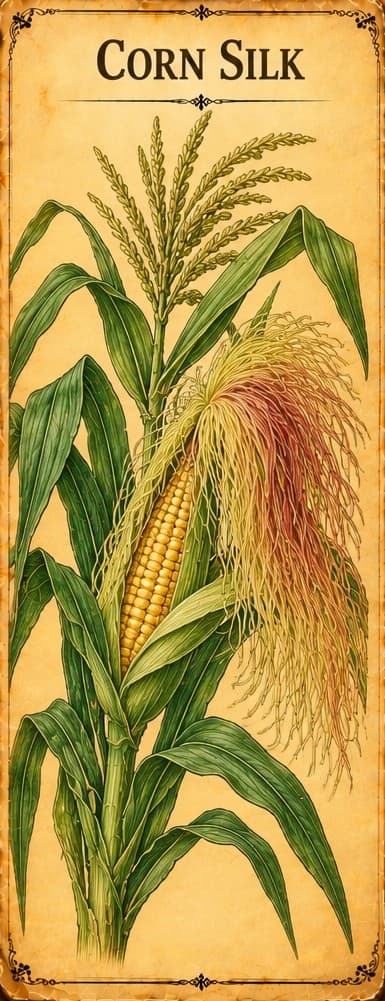
Corn Silk
Zea mays
The silky threads of the corn plant, used in traditional Chinese medicine since at least 1476 to increase urination and reduce swelling. Lab and animal studies suggest it may affect blood sugar, blood fats and blood pressure.
What is Corn Silk?
- Plant family
- Poaceae, the grass family
- Parts used
- The silky threads (stigmas) of the corn ear, usually dried and made into tea
- Genus
- Zea
- Species
- mays
Also called
Maize Silk, Stigma Maydis
Traditionally used for
- Fluid retention (traditional)
- Increasing urination (traditional)
- Diabetes (traditional)
Traditionally described as
- May increase urination (traditional)
- Antioxidant (in lab studies)
Traditions that use it
Traditional Chinese Medicine
Recorded since 1476 and listed in the Chinese Pharmacopoeia; used to increase urination and reduce swelling.
What does the research say?
Traditional use
These are traditional uses, not proven treatments.
In China, corn silk was first recorded in the Southern Yunnan Materia Medica in 1476, and it's listed in the Chinese Pharmacopoeia. In traditional Chinese medicine it's used to increase urination and reduce swelling, and it has been used for diabetes, diabetic kidney disease, high blood fats and high uric acid. It's also added to foods and health products.[1]
Laboratory & animal research
Lab and animal results show what might be worth studying in people. They don't show that the herb has these effects in humans.
In lab and animal studies, corn silk extracts have lowered blood fats, blood pressure and blood sugar, may help reduce inflammation, and have shown antioxidant activity. They also stopped the growth of some bacteria and the yeast Candida. Corn silk is described as a potentially safe herb, but these effects haven't been confirmed in people.[1]
In lab studies, compounds from corn silk, such as quercetin, rutin and apigenin, killed or slowed the growth of cervical, breast, pancreatic and colon cancer cells. In animal studies, its antioxidants reduced kidney damage caused by some chemotherapy drugs. This hasn't been tested in people with cancer.[2]
A 2025 review looked at corn silk's possible role in diseases linked to ageing, such as Alzheimer's and Parkinson's disease, heart and blood vessel disease, diabetes, obesity and kidney problems. In lab and animal studies its compounds acted as antioxidants and may help reduce inflammation, both thought to drive ageing.[3]
Research in people
The same review says early trials in people, mostly on diabetes, look promising, but larger, well-designed trials are needed to show whether corn silk is safe and works.[3]
In short
Not well tested in people.
Sources
- [1] An Umbrella Insight into the Phytochemistry Features and Biological Activities of Corn Silk: A Narrative Review · DOI: 10.3390/molecules29040891Peer-reviewed study
- [2] Anti-cancerous effect of corn silk: a critical review on its mechanism of action and safety evaluation · DOI: 10.1007/s13205-023-03673-1Peer-reviewed study
- [3] Unlocking Corn Silk's Potential: Bioactive Compounds Targeting Age-Related Diseases · DOI: 10.1002/mnfr.70117Peer-reviewed study
This information is educational and traditional in nature, and is not a substitute for professional medical advice.