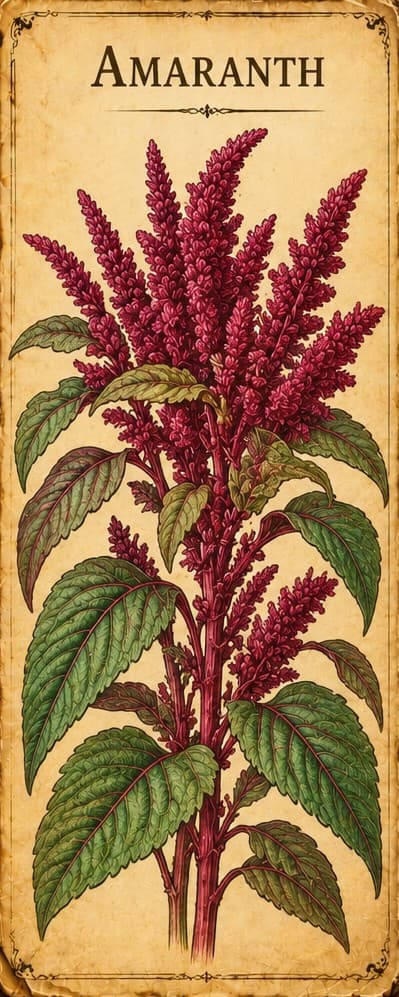
Amaranth
Amaranthus spp.
A group of fast-growing plants grown worldwide for their nutritious seeds (grain) and leaves, eaten in soups, sauces and baked goods. The grain is rich in protein, and researchers are studying its possible health benefits.
What is Amaranth?
- Plant family
- Amaranthaceae, the amaranth family
- Parts used
- The seeds (eaten as a grain), leaves, shoots and tender stems
- Where it grows
- About 55 of the 70 or so species are native to the Americas; the rest grow in Asia, Africa, Europe and Oceania
- Genus
- Amaranthus
- Species
- spp.
Also called
Grain Amaranth, Amaranthus
Traditionally used for
- Grain
- Leafy vegetable
- Nutrition
Traditionally described as
- High in protein and fiber
- Antioxidant (in lab tests)
What does the research say?
Traditional use
These are traditional uses, not proven treatments.
Amaranth is grown around the world for its grain and leaves. The leaves, shoots, tender stems and seeds are used in sauces, soups and many other dishes. About 17 of its 70 or so species are eaten. It grows quickly and copes well with heat, drought, pests and disease.[1]
Laboratory & animal research
Lab and animal results show what might be worth studying in people. They don't show that the herb has these effects in humans.
Amaranth is rich in carbohydrates, vitamins, calcium, iron, beta-carotene, fiber and protein building blocks such as lysine. A 2025 review of research reports antioxidant activity and possible effects on inflammation, infections, blood sugar and cholesterol.[1]
Research in people
Amaranth grain has more protein than true cereals. A 2012 review reported research suggesting it may help lower cholesterol, blood sugar and blood pressure and improve anemia. It was a summary review and didn't rate the strength of this evidence.[2]
In short
The reviews used here don't list specific safety concerns; it's mainly eaten as a food.
Sources
- [1] Botany, ethnomedicine, phytochemistry and pharmacology of Amaranthus spp.: a review · DOI: 10.1016/j.sajb.2025.01.030Peer-reviewed study
- [2] State of knowledge on amaranth grain: a comprehensive review · DOI: 10.1111/j.1750-3841.2012.02645.xPeer-reviewed study
This information is educational and traditional in nature, and is not a substitute for professional medical advice.