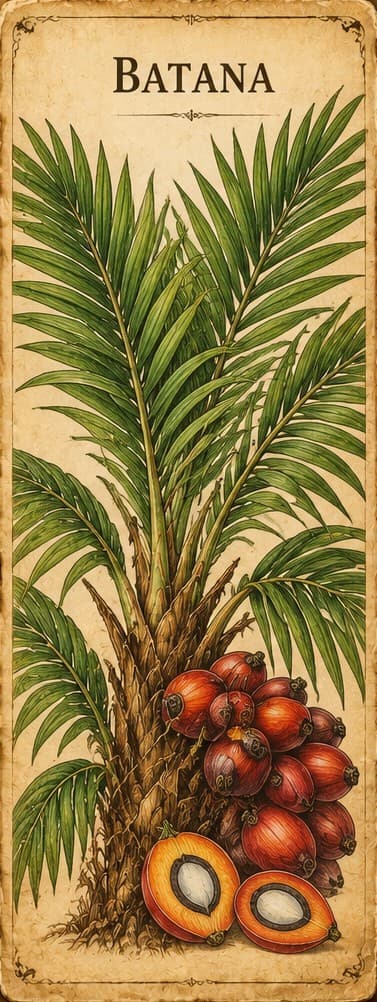
Batana
Elaeis oleifera
An oil from the nuts of the American oil palm, used for generations by the Miskito people of Honduras to care for hair and skin. There's no good evidence that it regrows hair.
What is Batana?
- Plant family
- Arecaceae, the palm family
- Parts used
- Oil from the nuts, put on the hair and scalp
- Where it grows
- Tropical Latin America, from Mexico to Peru
- Genus
- Elaeis
- Species
- oleifera
Also called
Batana Oil, American Oil Palm, American Palm Oil
Traditionally used for
- Hair care
- Skin care
Traditionally described as
- Moisturizes hair and scalp
Health topics
Where Batana appears in symptom search, and why. Being listed doesn't mean it's a proven treatment.
- Hair Loss
Traditionally used to care for hair. There's no good evidence that it regrows hair or reverses baldness.
Safety
Allergies
If you're allergic to nuts or palm oil, test a small patch of skin before using it.[1]
Side effects
Scalp irritation has been reported but is rare. Heavy use can build up on the scalp and lead to inflamed hair follicles (folliculitis).[1]
What does the research say?
Traditional use
These are traditional uses, not proven treatments.
Indigenous people in Central America, including the Miskito of Honduras, have used batana oil for centuries to care for their hair and skin.[1]
Research in people
There's very little scientific research on batana oil. A dermatologist says it could, in theory, help with common male- or female-pattern hair loss, but there's no evidence that it reverses baldness. The oil contains fats and vitamin E-type compounds that moisturize hair.[1]
Technical detail: contains carotenoids, tocopherols and tocotrienols, oleic acid and linoleic acid.
In short
Can occasionally irritate the scalp; patch-test first if you're allergic to nuts or palm oil.
Sources
- [1] Batana Oil for Hair Growth — WebMDGeneral reference
This information is educational and traditional in nature, and is not a substitute for professional medical advice.