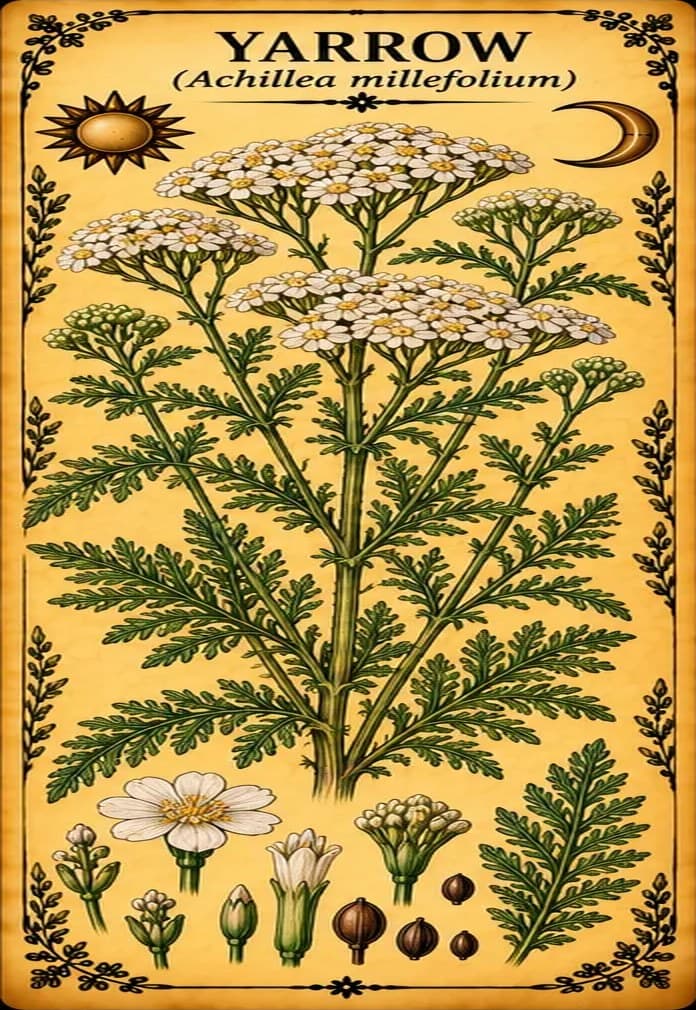
Yarrow
Achillea millefolium
An herb recognised in Europe as a traditional remedy for loss of appetite, mild digestive problems, period cramps and small wounds.
What is Yarrow?
- Plant family
- Asteraceae, the daisy family
- Parts used
- The flowering above-ground parts, as a tea, a liquid or tablet to take by mouth, or soaked dressings for the skin
- Genus
- Achillea
- Species
- millefolium
Also called
Milfoil, Yarrow Herb
Traditionally used for
- Appetite
- Digestion
- Bloating
- Period cramps
- Small wounds
Traditionally described as
- May ease cramps
Health topics
Where Yarrow appears in symptom search, and why. Being listed doesn't mean it's a proven treatment.
- Bloating
Recognised in Europe as a traditional remedy for bloating and gas.
- Cuts, Wounds, Burns and Skin Ulcers
Recognised in Europe as a traditional remedy for small, shallow wounds.
- Indigestion
Recognised in Europe as a traditional remedy for mild digestive problems.
- Loss of Appetite
Recognised in Europe as a traditional remedy for temporary loss of appetite.
- Menstrual Discomfort
Recognised in Europe as a traditional remedy for minor period cramps.
Traditions that use it
European Folk Medicine
Recognised in Europe as a traditional remedy for appetite, digestion, period cramps and small wounds.
Safety
Who should avoid it
Only for adults and teenagers over 12.[1]
Allergies
Don't use yarrow if you're allergic to it or to other plants in the daisy family (Asteraceae). Allergic skin reactions have been reported.[1]
How much to use
See a doctor if appetite or digestive problems last more than 2 weeks, or if period cramps or wounds don't improve within 1 week.[1]
What does the research say?
Traditional use
These are traditional uses, not proven treatments.
The European Medicines Agency recognises yarrow as a traditional herbal medicine, based on long use, for:
- Temporary loss of appetite
- Mild digestive problems, including bloating and gas
- Minor belly cramps during periods
- Small, shallow wounds (put on the skin)
In short
Don't use if you're allergic to plants in the daisy family; only for those over 12.
Sources
- [1] Millefolii herba (yarrow herb): herbal medicinal product summary — European Medicines Agency (EMA), Committee on Herbal Medicinal ProductsGovernment health agency
This information is educational and traditional in nature, and is not a substitute for professional medical advice.