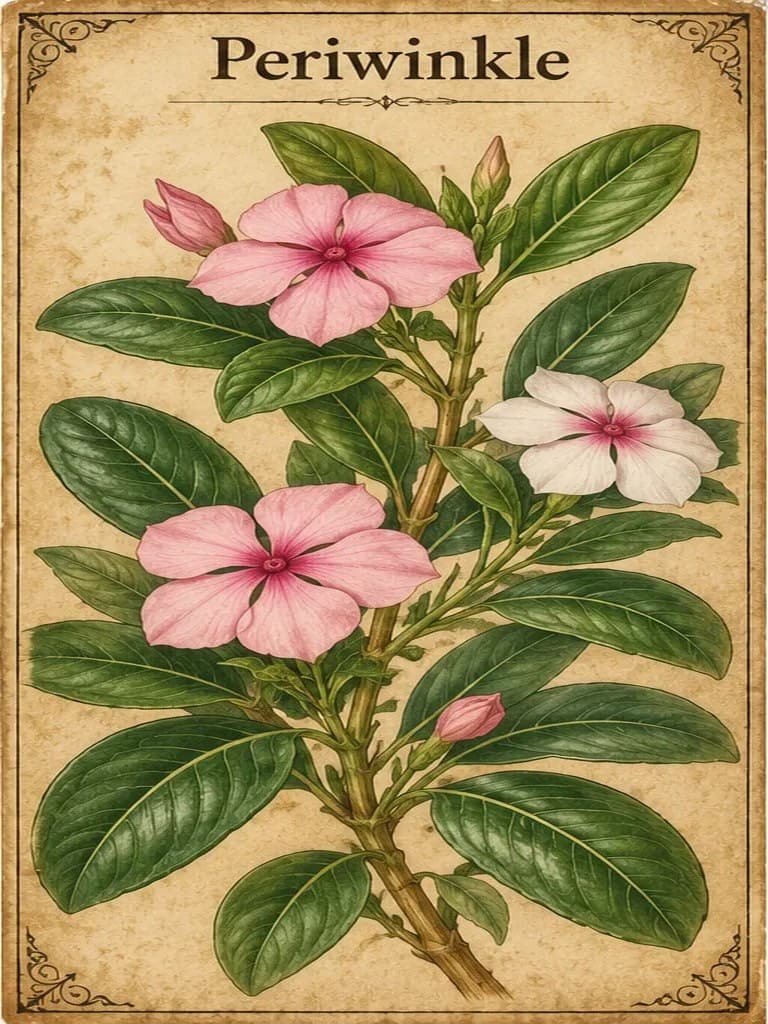
Periwinkle
Catharanthus roseus
Madagascar periwinkle, a garden plant used in Caribbean folk medicine for diabetes and the source of two cancer drugs. The plant can be poisonous.
What is Periwinkle?
- Plant family
- Apocynaceae, the dogbane and milkweed family
- Parts used
- In traditional medicine, the dried flowers and stems are used.
- Where it grows
- Native to Madagascar; now grown in many countries as a garden plant
- Genus
- Catharanthus
- Species
- roseus
Also called
Madagascar Periwinkle
Regional names
White Periwinkle
Older scientific names
Vinca rosea
Traditionally used for
- Diabetes (traditional)
- Cancer (traditional)
Traditionally described as
- Lowers blood sugar (in animal studies)
Health topics
Where Periwinkle appears in symptom search, and why. Being listed doesn't mean it's a proven treatment.
- High Blood Sugar
Used for diabetes in Caribbean and folk medicine. It lowered blood sugar in diabetic mice but hasn't been tested in people, and the plant can be poisonous.
- Liver Safety Warnings
A woman who drank periwinkle juice developed liver damage with jaundice and recovered after stopping.
Traditions that use it
Caribbean Folk Medicine
Used for diabetes in Trinidad and Tobago.
Ayurveda
Used for cancer, diabetes, and stomach, kidney, liver and heart problems.
Safety
Toxicity testing
Its best-known compounds, vincristine and vinblastine, are powerful cancer drugs used in chemotherapy. The plant contains only tiny amounts, but these compounds are highly poisonous on their own.[1]
In a 2024 case report, a 65-year-old woman drank periwinkle juice for neck pain. She developed fever, belly pain, loss of appetite and numb legs. Tests showed liver damage with jaundice (yellowing), and she developed stomach ulcers. She recovered after she stopped taking it.[2]
Technical detail: leukocytosis, raised liver enzymes and hyperbilirubinemia; presentation mimicked acute cholangitis.
What does the research say?
Traditional use
These are traditional uses, not proven treatments.
In Trinidad and Tobago, white periwinkle is used for diabetes. The 2006 review that recorded this listed it among the plants that justify more formal testing.[3]
In Ayurveda and folk medicine, different parts of the plant are used for:
- Many types of cancer
- Diabetes
- Stomach problems
- Kidney, liver and heart diseases
Laboratory & animal research
Lab and animal results show what might be worth studying in people. They don't show that the herb has these effects in humans.
In mice with diabetes, water-based extracts lowered blood sugar. A stem extract cut blood sugar by about half, close to the effect of the diabetes medicine tolbutamide.[5]
Technical detail: alloxan-induced diabetes; 250 mg/kg aqueous stem extract given intraperitoneally lowered blood glucose by 52.90%, its alkaloid-free fraction (300 mg/kg) by 51.21%, tolbutamide by 58.1%.
A 2022 review reported that its extracts and compounds acted against cancer cells, diabetes, germs and insects, and as antioxidants, in lab and animal studies. Toxicity studies found they are safe only up to a certain dose, above which they cause harm.[4]
Technical detail: 344 compounds reported, including 110 monoterpene indole alkaloids and 35 bisindole alkaloids; anticancer/cytotoxic, antidiabetic, antimicrobial, antioxidant, larvicidal and pupicidal activity.
In short
Contains highly poisonous compounds; drinking periwinkle juice has caused liver damage and stomach ulcers.
Sources
- [1] Ornamental exterior versus therapeutic interior of Madagascar periwinkle (Catharanthus roseus): the two faces of a versatile herb — The Scientific World Journal · DOI: 10.1155/2015/982412Peer-reviewed study
- [2] Catharanthus roseus intoxication mimicking acute cholangitis — BMC Complementary Medicine and Therapies · DOI: 10.1186/s12906-024-04441-1Peer-reviewed study
- [3] Ethnomedicines used in Trinidad and Tobago for urinary problems and diabetes mellitus — Journal of Ethnobiology and Ethnomedicine · DOI: 10.1186/1746-4269-2-45Peer-reviewed study
- [4] Catharanthus roseus (L.) G. Don: A review of its ethnobotany, phytochemistry, ethnopharmacology and toxicities — Journal of Ethnopharmacology · DOI: 10.1016/j.jep.2021.114647Peer-reviewed study
- [5] Hypoglycemic Activity of Aqueous Extracts from Catharanthus roseus — Evidence-Based Complementary and Alternative Medicine · DOI: 10.1155/2012/934258Peer-reviewed study
This information is educational and traditional in nature, and is not a substitute for professional medical advice.