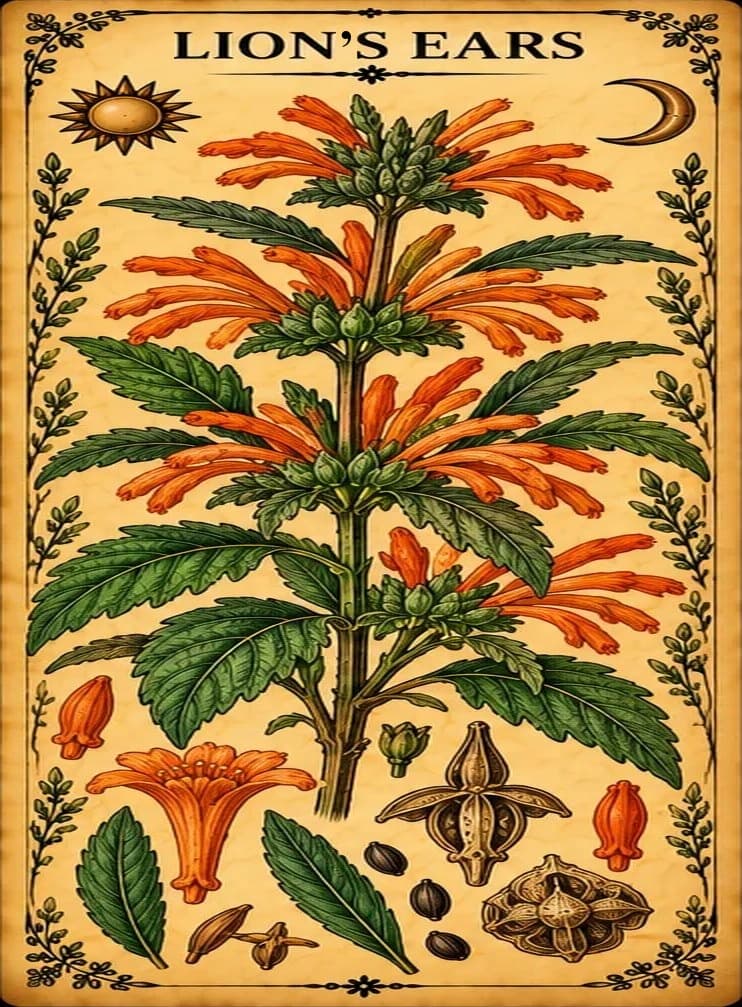
Lion's Ear
Leonotis nepetifolia
A plant in the mint family, known as shandilay in Trinidad, where it's a popular traditional remedy for colds and coughs. Research so far is limited to lab and animal studies.
What is Lion's Ear?
- Plant family
- Lamiaceae, the mint family
- Parts used
- The leaves. In Trinidad they are made into a tea, boiled, or pounded and squeezed for their juice, with salt added.
- Where it grows
- Native to tropical Africa and southern India
- Genus
- Leonotis
- Species
- nepetifolia
Also called
Lion's Ears, Lions Ear
Regional names
Shandilay
Traditionally used for
- Colds
- Cough
- Fever
- Asthma (traditional)
- Diabetes (traditional)
Traditionally described as
- May fight germs (in lab tests)
- Antioxidant (in lab tests)
Health topics
Where Lion's Ear appears in symptom search, and why. Being listed doesn't mean it's a proven treatment.
- Asthma and Wheezing
Traditionally used for asthma in Trinidad. This use hasn't been tested in people.
- Colds and Nasal Congestion
A popular traditional remedy for colds in Trinidad. This use hasn't been tested in people.
- Cough
A popular traditional remedy for coughs in Trinidad. This use hasn't been tested in people.
- Fever
Traditionally used for fever in Trinidad. This use hasn't been tested in people.
- High Blood Sugar
Traditionally used for diabetes in Trinidad. This use hasn't been tested in people.
Traditions that use it
Caribbean Folk Medicine
In rural Trinidad, where it's called shandilay, about 30% of people surveyed named it as a remedy for colds and coughs.
African Traditional Medicine
Widely used as a medicinal plant in its native range, which includes tropical Africa.
Safety
Toxicity testing
Little is known about its safety, and it hasn't been studied in people. In a 2025 lab study, flower extracts harmed developing zebrafish embryos and caused birth defects.[1]
What does the research say?
Traditional use
These are traditional uses, not proven treatments.
In a 2007–2008 survey of 450 households in rural Trinidad, about 30% of people named lion's ear (shandilay) as a remedy for colds and coughs. That was enough to count it as a popular, established use.
People also used it for:
- Fever
- Asthma
- Diabetes
- As a "cooling" or cleansing remedy
Technical detail: 85 of 89 citations were for common cold and cough (30.5% of informants), above the TRAMIL 20% threshold for significant use. Leaves taken by mouth as an infusion, a decoction, or juice pounded out with salt.
Widely used for medicine in its native range of tropical Africa and southern India.[3]
Laboratory & animal research
Lab and animal results show what might be worth studying in people. They don't show that the herb has these effects in humans.
A 2018 review of 32 lab and animal studies reported that lion's ear extracts may fight bacteria, viruses and fungi, may help reduce inflammation, and act as antioxidants. They also showed effects against seizures and anxiety. The review didn't report any studies in people.[3]
Technical detail: antibacterial, antiviral, antifungal, anti-inflammatory, antioxidant, anticonvulsant, anxiolytic and anticarcinogenic activity; main compounds are labdane and bis-spirolabdane diterpenes, flavonoids, fatty acids and esters, iridoids, phenylethanoid glycosides and coumarins.
In a 2025 study on zebrafish embryos, extracts of lion's ear flowers were toxic and caused developmental defects. The authors say the plant's possible risks need careful study.[1]
Technical detail: 96-hour exposure to a methanol extract and its n-hexane and ethyl acetate fractions; the methanol extract and ethyl acetate fraction were toxic, the ethyl acetate fraction markedly embryotoxic and teratogenic. Verbascoside was isolated from the flowers.
In short
Little is known about its safety; flower extracts caused birth defects in zebrafish embryos.
Sources
- [1] Comprehensive analysis of Leonotis nepetifolia flower extracts: phytochemical composition and toxicity in zebrafish embryos — Natural Product Research · DOI: 10.1080/14786419.2025.2457123Peer-reviewed study
- [2] An ethnobotanical survey of medicinal plants in Trinidad — Journal of Ethnobiology and Ethnomedicine · DOI: 10.1186/s13002-015-0052-0Peer-reviewed study
- [3] A review of the chemical composition and biological activity of Leonotis nepetifolia (Linn.) R. Br. (lion's ear) — Revista Cubana de Plantas MedicinalesPeer-reviewed study
This information is educational and traditional in nature, and is not a substitute for professional medical advice.