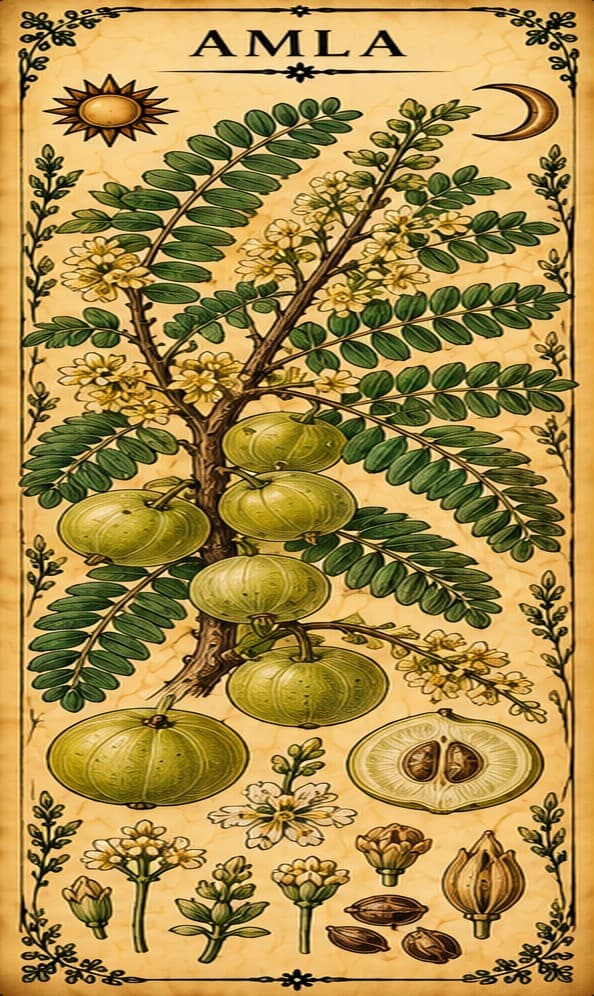
Amla
Phyllanthus emblica
Indian gooseberry, a fruit rich in vitamin C and antioxidants, used in Ayurveda and as one of the three fruits in Triphala. Trials suggest it may lower cholesterol, blood sugar and a marker of inflammation.
What is Amla?
- Plant family
- Phyllanthaceae, the leafflower family
- Parts used
- The fruit
- Where it grows
- Native to India and Southeast Asia
- Genus
- Phyllanthus
- Species
- emblica
Also called
Indian Gooseberry
Traditional names
Amalaki
Older scientific names
Emblica officinalis
Traditionally used for
- Immune support
- Cholesterol
- Blood sugar
- Vitamin C
Traditionally described as
- Antioxidant
Health topics
Where Amla appears in symptom search, and why. Being listed doesn't mean it's a proven treatment.
- High Blood Sugar
A review of 5 trials found it lowered fasting blood sugar.
- High Cholesterol
A review of 5 trials found it lowered total and LDL cholesterol and triglycerides.
- Immune Support (Colds and Flu)
Rich in vitamin C; trials found it lowered a marker of inflammation, but it hasn't been tested for preventing infections.
Traditions that use it
Ayurveda
Known as amalaki; one of the three fruits in Triphala.
What does the research say?
Traditional use
These are traditional uses, not proven treatments.
Amla fruit is rich in vitamin C and plant compounds called polyphenols. It is widely used in traditional medicine for its antioxidant effects, and to help reduce inflammation, blood sugar and cholesterol.[1]
Laboratory & animal research
Lab and animal results show what might be worth studying in people. They don't show that the herb has these effects in humans.
In lab and animal studies, amla improved the body's antioxidant defenses and showed effects on cholesterol, blood sugar, inflammation, the digestive tract and the nervous system.[1]
Research in people
A 2023 review of 5 randomized trials found amla supplements lowered C-reactive protein (a marker of inflammation), fasting blood sugar, total and LDL cholesterol, and triglycerides.[2]
In short
Research has been in small trials.
Sources
- [1] Functional and Nutraceutical Significance of Amla (Phyllanthus emblica L.): A Review — Antioxidants (Basel) · DOI: 10.3390/antiox11050816Peer-reviewed study
- [2] The impact of Emblica Officinalis (Amla) on lipid profile, glucose, and C-reactive protein: A systematic review and meta-analysis of randomized controlled trials — Diabetes & Metabolic Syndrome · DOI: 10.1016/j.dsx.2023.102729Review or clinical trial
This information is educational and traditional in nature, and is not a substitute for professional medical advice.