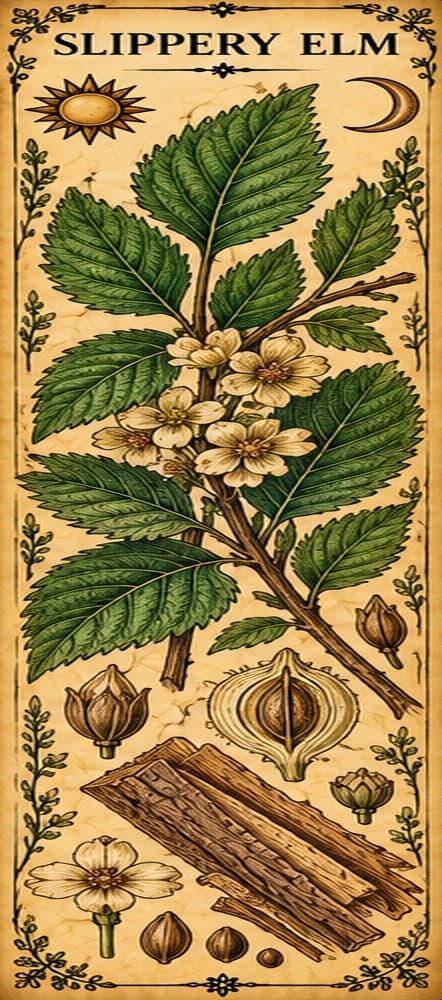
Slippery Elm
Ulmus rubra
The inner bark of a North American elm, taken by mouth for sore throat and stomach upset and used on the skin for rashes. It is generally recognized as safe.
What is Slippery Elm?
- Plant family
- Ulmaceae, the elm family
- Parts used
- The inner bark
- Where it grows
- Native to the eastern and central United States and Canada
- Genus
- Ulmus
- Species
- rubra
Traditionally used for
- Stomach upset
- Sore throat
- Skin irritation
Traditionally described as
- Soothing (traditional)
Health topics
Where Slippery Elm appears in symptom search, and why. Being listed doesn't mean it's a proven treatment.
- Indigestion
Traditionally taken for stomach and gut upset; not tested in trials.
- Sore Throat
Traditionally taken for sore throat; not tested in trials.
Safety
Toxicity testing
Slippery elm is generally recognized as safe. There's no evidence it raises liver enzymes or causes liver injury.[1]
What does the research say?
Traditional use
These are traditional uses, not proven treatments.
The inner bark of slippery elm is taken by mouth for sore throat and stomach and gut upset, and put on the skin for rashes and irritation.[1]
In short
Generally recognized as safe; it hasn't been linked to liver injury.
Sources
- [1] Slippery Elm. In: LiverTox: Clinical and Research Information on Drug-Induced Liver Injury — LiverTox, National Institute of Diabetes and Digestive and Kidney Diseases (NIH)Government health agency
This information is educational and traditional in nature, and is not a substitute for professional medical advice.