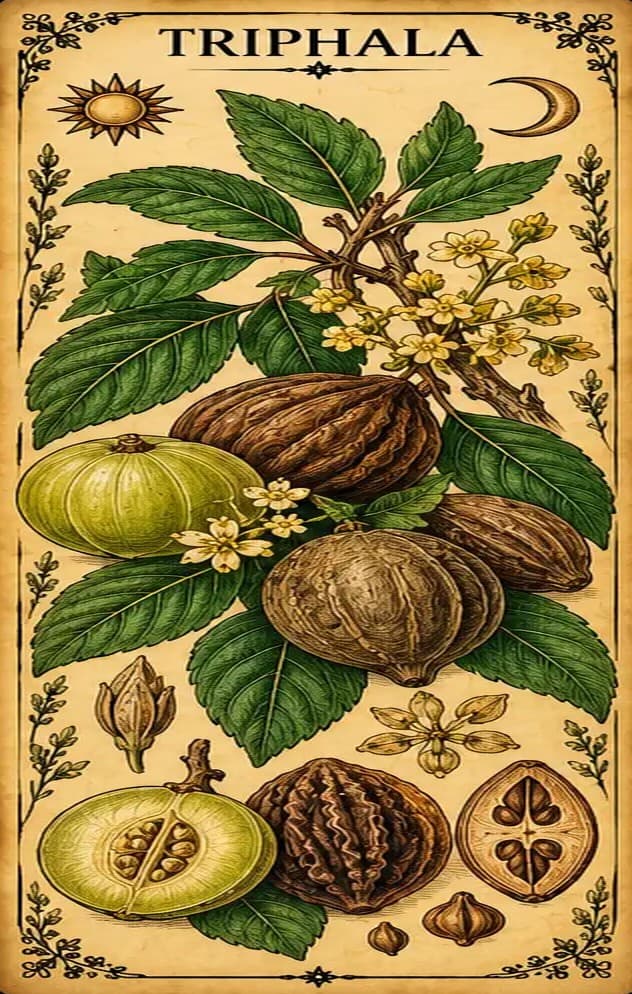
Triphala
Phyllanthus emblica, Terminalia bellirica, Terminalia chebula
A classic Ayurvedic blend of three dried fruits (amalaki, bibhitaki and haritaki), used as a cornerstone of digestive care and as a laxative. Research in people is limited.
What is Triphala?
- Plant family
- Phyllanthaceae (the leafflower family) for amalaki; Combretaceae (the combretum family) for bibhitaki and haritaki
- Parts used
- The dried fruits of three plants
- Genus
- Phyllanthus / Terminalia
- Species
- emblica / bellirica / chebula
Also called
Emblica officinalis
Traditional names
Amalaki, Bibhitaki, Haritaki
Traditionally used for
- Constipation
- Digestion
- Gut health
Traditionally described as
- Laxative (traditional)
- Antioxidant
Health topics
Where Triphala appears in symptom search, and why. Being listed doesn't mean it's a proven treatment.
- Bloating
One clinical trial reported less gas and belly pain.
- Constipation
Used as a laxative in Ayurveda. One clinical trial reported less constipation.
Traditions that use it
Ayurveda
A cornerstone of digestive and rejuvenating treatment, made from three fruits: amalaki, bibhitaki and haritaki.
What does the research say?
Traditional use
These are traditional uses, not proven treatments.
Triphala is a well-known Ayurvedic medicine made from the fruits of three plants: amalaki (Emblica officinalis), bibhitaki (Terminalia bellirica) and haritaki (Terminalia chebula). It is a cornerstone of digestive and rejuvenating treatment, and is used as a laxative.[1]
Laboratory & animal research
Lab and animal results show what might be worth studying in people. They don't show that the herb has these effects in humans.
In animal studies, triphala extracts prevented diarrhea, protected the gut lining, protected against stress ulcers and reduced colitis. Lab research suggests its plant compounds encourage helpful gut bacteria (Bifidobacteria and Lactobacillus) and discourage unwanted ones.[1]
Research in people
One clinical trial in people with digestive disorders reported that triphala reduced constipation, mucus, belly pain, excess stomach acid and gas, and improved how often and how easily people passed stools. More clinical research is needed.[1]
In short
Research on its safety in people is limited.
Sources
- [1] Therapeutic Uses of Triphala in Ayurvedic Medicine — Journal of Alternative and Complementary Medicine · DOI: 10.1089/acm.2017.0083Peer-reviewed study
This information is educational and traditional in nature, and is not a substitute for professional medical advice.