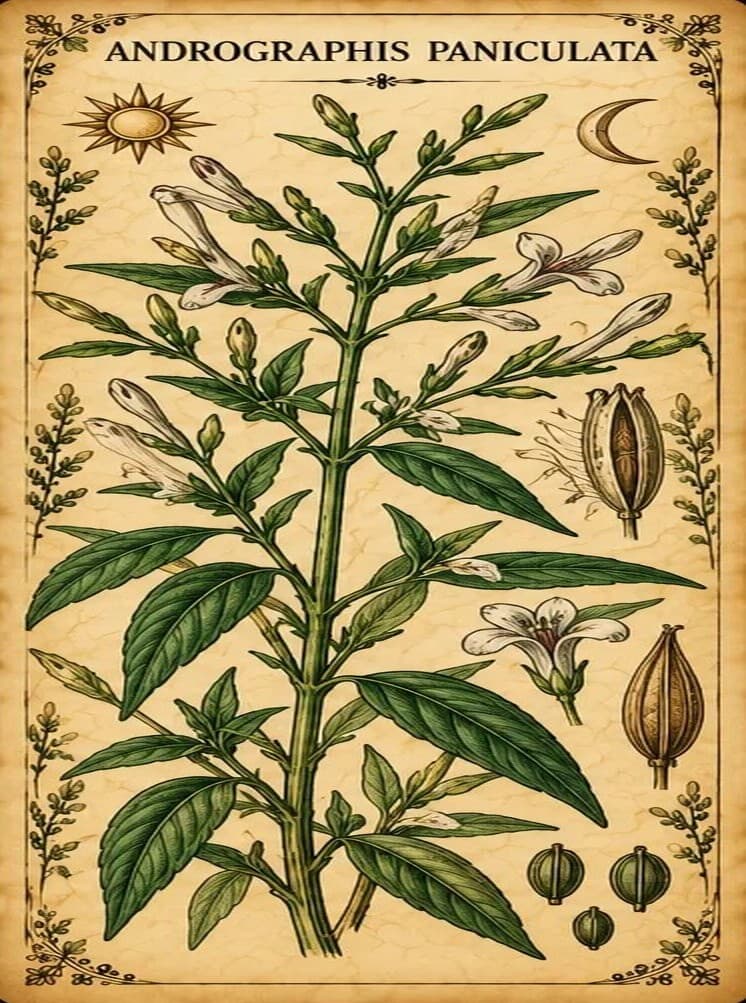
Andrographis
Andrographis paniculata
A bitter herb used across Asia for infections and fevers, and traditionally for skin inflammation and wounds. It has mainly been studied for colds and flu.
Andrographis may interact with some medicines. If you take any medicine, read Interactions with medicines below and talk to your doctor or pharmacist before using it.
What is Andrographis?
- Plant family
- Acanthaceae, the acanthus family
- Parts used
- The above-ground parts
- Where it grows
- Common in much of Asia
- Genus
- Andrographis
- Species
- paniculata
Also called
Indian Echinacea, Chiretta
Traditional names
Kalmegh, Chuan Xin Lian
Traditionally used for
- Colds and flu
- Skin inflammation (traditional)
- Wounds (traditional)
Traditionally described as
- Bitter tonic
Health topics
Where Andrographis appears in symptom search, and why. Being listed doesn't mean it's a proven treatment.
- Colds and Nasal Congestion
Mostly studied for colds and flu; it may shorten symptoms and make them less severe.
- Cough
Reviews suggest it may reduce coughing with colds and flu.
- Cuts, Wounds, Burns and Skin Ulcers
Traditionally used for wounds and skin infections; not tested for this in people.
- Immune Support (Colds and Flu)
Mostly studied for colds and flu; it may shorten symptoms and make them less severe.
- Skin Irritation, Rashes and Itching
Traditionally used for skin inflammation. In lab tests it protected skin cells from UV damage; it can also cause skin rash.
Traditions that use it
Traditional Chinese Medicine
Known as chuan xin lian; used, often with other herbs, for infections and fevers.
Ayurveda
Known as kalmegh; used for infections and fevers.
Safety
Interactions with medicines
Andrographis may interact with:
- Blood pressure medicines (it may lower blood pressure further)
- Blood thinners and anti-platelet medicines
- Chemotherapy
- The asthma medicine aminophylline
- Many medicines broken down by the liver
Talk with your doctor before using it if you take any of these.[1]
Technical detail: CYP1A2, 2C9 and 3A4 inhibition and CYP1A1 induction in lab studies; UGT2B7 substrates.
Allergies
Andrographis can cause allergic reactions, including skin rash and, in some cases, severe allergic reactions (anaphylaxis). Some types of extract may carry a higher risk.[1]
Side effects
Other side effects include headache, tiredness, dizziness, nausea, vomiting, diarrhea, a changed sense of taste, and painful or swollen lymph nodes with very high doses. Kidney injury has been reported with andrographolide given into a vein.[1]
What does the research say?
Traditional use
These are traditional uses, not proven treatments.
Laboratory & animal research
Lab and animal results show what might be worth studying in people. They don't show that the herb has these effects in humans.
In lab tests on skin cells damaged by ultraviolet (UVB) light, andrographis extract and its main compound, andrographolide, helped the cells survive and reduced signs of damage and inflammation.[2]
Technical detail: HaCaT keratinocytes and epidermal stem cells; lower ROS, IL-1β, IL-6 and CDKN1A; diterpene lactones identified by UPLC-Q-TOF-MS.
In lab studies, andrographis showed antibacterial, antioxidant and anti-cancer activity, and reduced inflammation.[1]
Research in people
Andrographis has mostly been studied for colds and flu. Alone or with other herbs, it may reduce how long cold and flu symptoms last and how bad they are, and reviews suggest it may reduce coughing. Small trials suggest possible benefits in ulcerative colitis and rheumatoid arthritis, but more research is needed. It hasn't been studied on the skin in people.[1]
In short
Can cause allergic reactions and skin rash, and may interact with many medicines.
Sources
- [1] Andrographis — Memorial Sloan Kettering Cancer Center, About HerbsGeneral reference
- [2] Exploring the Active Constituents of Andrographis paniculata in Protecting the Skin Barrier and the Synergistic Effects with Collagen XVII — Antioxidants (Basel) · DOI: 10.3390/antiox14010118Peer-reviewed study
This information is educational and traditional in nature, and is not a substitute for professional medical advice.