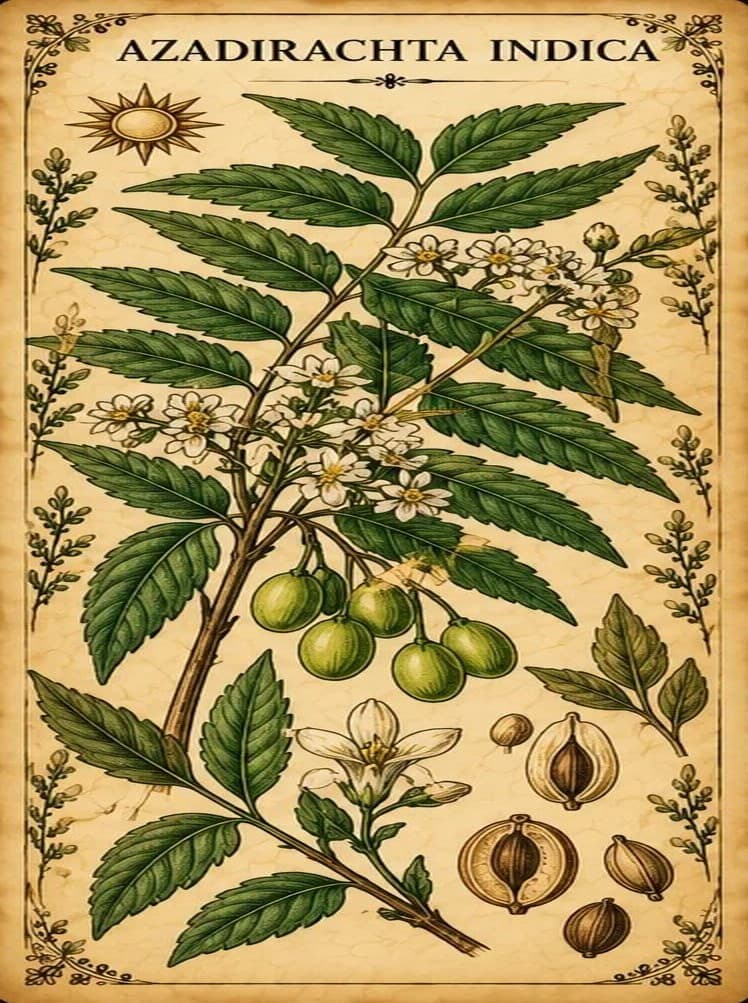
Neem
Azadirachta indica
A South Asian tree used in Ayurvedic medicine on the skin and for oral hygiene. Neem works against lice, and a small trial found a neem lotion worked as well as standard treatment for scabies.
Neem may interact with some medicines. If you take any medicine, read Interactions with medicines below and talk to your doctor or pharmacist before using it.
What is Neem?
- Plant family
- Meliaceae, the mahogany family
- Parts used
- The bark, leaves, flowers, seeds and seed oil
- Where it grows
- A tree common in South Asia
- Genus
- Azadirachta
- Species
- indica
Also called
Neem Oil, Margosa, Margosa Oil
Traditionally used for
- Skin conditions
- Lice
- Scabies
- Oral hygiene
Traditionally described as
- Kills lice and pests
Health topics
Where Neem appears in symptom search, and why. Being listed doesn't mean it's a proven treatment.
- Head Lice and Scabies
Neem is effective against lice. In a small trial, a neem leaf lotion worked as well as permethrin for scabies.
- Skin Irritation, Rashes and Itching
Used on the skin for skin conditions in Ayurvedic medicine. It can itself cause skin rashes.
Traditions that use it
Ayurveda
Used on the skin for skin conditions, taken for stomach and gut complaints, and used for oral hygiene.
Safety
Interactions with medicines
In lab tests, neem extract slowed liver enzymes that break down many medicines. Whether this matters in people isn't known.[1]
Allergies
On the skin, neem can cause a rash and itchy, dry or red skin (contact dermatitis). One woman who used neem oil on blisters developed a worsening of a blistering skin disease that needed medical treatment.[1]
Toxicity testing
Never swallow neem oil. It has caused severe poisoning in children and adults, with vomiting, drowsiness, diarrhea, vision loss and seizures. In the most serious cases, people fell into a coma or died.[1]
What does the research say?
Traditional use
These are traditional uses, not proven treatments.
The bark, leaves, flowers and seeds of neem have been used as food and medicine for centuries. In Ayurvedic medicine, neem is used on the skin for skin conditions, taken for stomach and gut complaints, and used as a mouth rinse. It is also used as a disinfectant and against pests and parasites.[1]
Laboratory & animal research
Lab and animal results show what might be worth studying in people. They don't show that the herb has these effects in humans.
In lab studies, neem showed activity against microbes, pests and parasites, and slowed the growth of some cancer cells. In mice, a neem leaf extract reduced stomach tumors caused by chemicals. There are no studies of neem as a cancer treatment in people.[1]
Research in people
Research in people suggests:
- Neem is effective against lice.
- It reduces dental plaque and mouth bacteria, though results conflict.
- A small study found neem bark extract reduced stomach acid.
- Extracts improved blood sugar control in people with metabolic syndrome.
More studies are needed.[1]
In a trial of 61 male students with scabies, a 10% neem leaf lotion was compared with 5% permethrin, the standard treatment, and with another herbal lotion. All three reduced skin lesions, with no significant difference between them. Quality of life improved in all groups, and sooner (by day 7) with neem. No side effects were reported. The authors couldn't fully control how the lotions were used or rule out reinfection.[2]
In short
Never swallow neem oil: it has caused severe poisoning in children and adults.
Sources
- [1] Neem — Memorial Sloan Kettering Cancer Center, About HerbsGeneral reference
- [2] Comparative study of 5% permethrin, 10% neem leaf extract, and 10% brotowali stem extract for scabies treatment — Frontiers in Medicine · DOI: 10.3389/fmed.2025.1672149Peer-reviewed study
This information is educational and traditional in nature, and is not a substitute for professional medical advice.