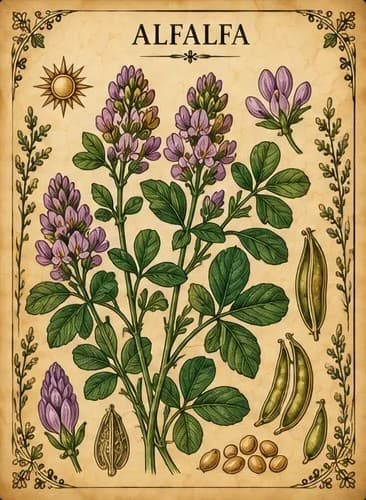
Alfalfa
Medicago sativa
A widely used food and animal-feed crop, promoted as a supplement for many uses, including lowering cholesterol. Extracts have been studied on skin cells in the lab, but not on skin in people.
What is Alfalfa?
- Plant family
- Fabaceae, the pea and bean family
- Parts used
- The leaves, seeds and sprouts
- Genus
- Medicago
- Species
- sativa
Also called
Lucerne, Buffalo Herb, Purple Medick
Traditionally used for
- Cholesterol
- Skin care (lab research)
- Nutrition
Traditionally described as
- Antioxidant
Health topics
Where Alfalfa appears in symptom search, and why. Being listed doesn't mean it's a proven treatment.
- High Cholesterol
Two small, uncontrolled trials found alfalfa supplements lowered cholesterol.
- Scars, Wrinkles and Skin Aging
Extracts showed antioxidant activity on skin cells in the lab. It hasn't been tested on skin in people.
Safety
Who should avoid it
Don't take alfalfa if you have:
- Lupus: alfalfa tablets have caused relapses in people whose lupus was in remission
- Gout: alfalfa is high in purines and may raise uric acid levels
Side effects
Alfalfa supplements can cause loose stools, diarrhea, belly discomfort and gas.[1]
Pregnancy
Because of its hormone-like effects, avoid alfalfa during pregnancy and breastfeeding.[1]
Contamination
Alfalfa sprouts and seeds have caused outbreaks of food poisoning (E. coli and Salmonella), including deaths. Listeria infection has been reported from contaminated alfalfa tablets.[1]
What does the research say?
Traditional use
These are traditional uses, not proven treatments.
Alfalfa leaves and seeds are thought to increase urination and have been used for diabetes, thyroid problems, arthritis, high cholesterol, stomach ulcers, asthma and hay fever, and to bring on menstruation and increase breast milk. It is also promoted as a source of vitamins A, C, E and K and minerals.[1]
Laboratory & animal research
Lab and animal results show what might be worth studying in people. They don't show that the herb has these effects in humans.
In lab tests on human skin cells, extracts of alfalfa seeds and leaves were rich in flavonoids and other plant compounds and showed strong antioxidant activity. The authors suggest alfalfa may be a useful ingredient in skin care products.[2]
Lab studies found alfalfa has plant estrogens that made hormone-sensitive breast cancer cells grow. Rats fed alfalfa were more likely to get colon cancer, though this hasn't been seen in people.[1]
Research in people
Two small, uncontrolled trials found alfalfa supplements lowered cholesterol in people with high cholesterol; larger trials are needed. There's no scientific evidence for its other uses, and no evidence it treats cancer.[1]
In short
Avoid if you have lupus, gout, or are pregnant or breastfeeding; raw sprouts have caused food poisoning.
Sources
- [1] Alfalfa — Memorial Sloan Kettering Cancer Center, About HerbsGeneral reference
- [2] Antioxidant Activity and Cytotoxicity of Medicago sativa L. Seeds and Herb Extract on Skin Cells — BioResearch Open Access · DOI: 10.1089/biores.2020.0015Peer-reviewed study
This information is educational and traditional in nature, and is not a substitute for professional medical advice.